CEO KT PACIFIC - 太平洋CEO




The Newly Industrial Economies reappears with the rise of the economy in Cambodia.
Major constructions
Major constructions
A Chinese-funded new stadium in Cambodia
China is helping to build a new stadium for Cambodia with an investment amount of about CNY1.1 billion, which will host the Southeast Asian Games in 2023

Major constructions
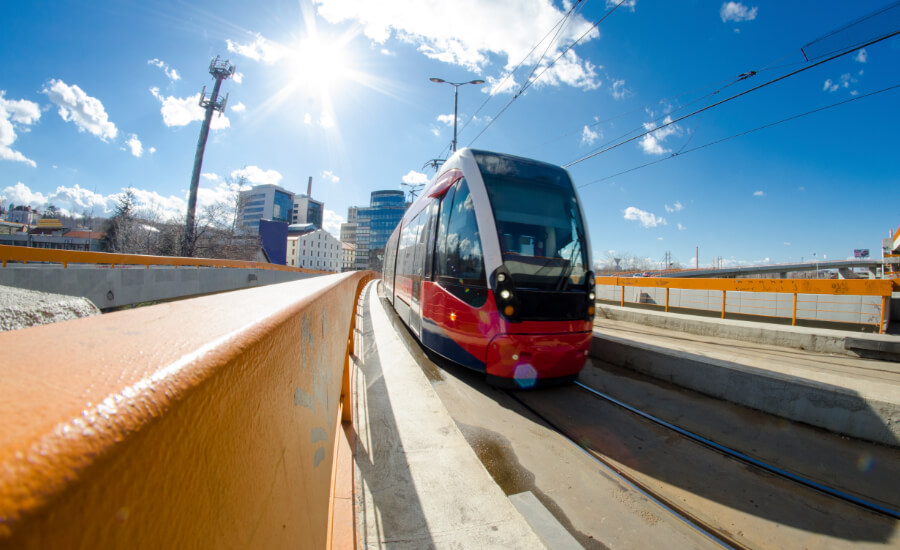
Phnom Penh is building a light rail system
In early 2017, the Ministry of Public Works and Transport of Cambodia announced the construction of a light rail system in Phnom Penh to ease traffic congestion. The Japan International Cooperation Agency (JICA) had conducted analytical studies on the project since April.
Major constructions
Construction of submarine cable linking three countries - Cambodia, Malaysia, and Thailand, has been approved
Construction of submarine cable linking three countries - Cambodia, Malaysia, and Thailand, has been approved
Telcotech Ltd., Telekom Malaysia Berhad (TMB), and Symphony Communication Public Company Limited (SCPC) signed a contract for the design and construction of the MCT (Malaysia-Cambodia-Thailand) submarine cable system several years ago. About 1,300 kilometers long, the MCT submarine cable system started to operate at the end of 2016, with a total construction amount of US$70 million.

Major constructions
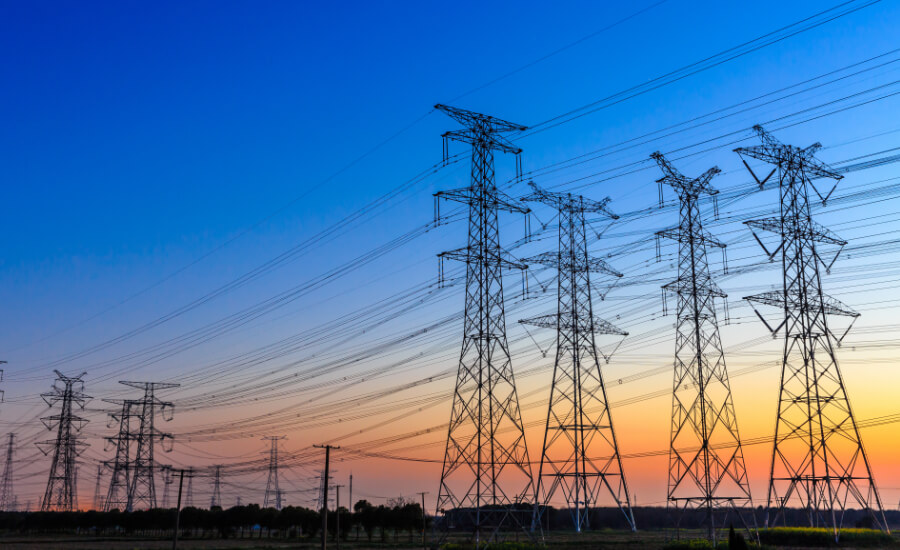
Cambodia-China jointly constructed the transmission network project
Phase 5 and phase 6 transmission network expansion projects cover about 13 provinces in the north-central and southwestern coastal areas of Cambodia. After completion, it will improve the electricity status of the provinces and cities along the line to meet not only the electricity consumption of residents but also fulfill the electricity demand of industrial production.

Major constructions
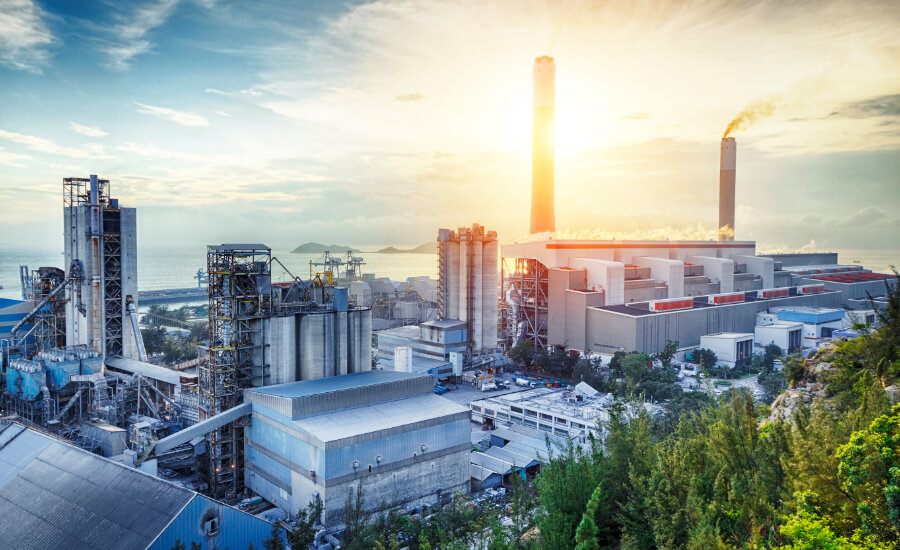
Cambodia-China jointly constructed the coal-fired power plant
The primary purpose is to supply electricity to the Sihanoukville Special Economic Zone (SSEZ), with an investment amount of US$383 million. Completed at the end of 20xx, the power plant has solved the electricity problem in Sihanoukville Province.
Major constructions
Cambodia's largest hydroelectric power plant started to generate electricity in 2017
The secondary hydroelectric power plant at Sesan River in Stung Treng Province (Lower Sesan 2 Hydropower Dam) has begun to generate electricity in 2017.
Major constructions
Phase 2 expansion of Phnom Penh Airport
The construction of the domestic passenger terminal at Phnom Penh International Airport was completed at the end of 2017. The project was built by the construction subsidiary of Malaysia-listed Muhibbah Engineering (M) Bhd and the French-owned Vinci Holding, with an investment amount of approximately US$23 million.

Major constructions
A highway connecting Phnom Penh and Ho Chi Minh City, Vietnam
Cambodia plans to build a highway connecting Vietnam, a two-hour drive from Phnom Penh to Ho Chi Minh City. After completion, it will significantly reduce transportation costs and time.

Major constructions
The National Highway 4 ha shortened the distance between Phnom Penh-Westport (Sihanoukville Port) by 191km
The National Highway 4 stretches 191km in length, from the capital Phnom Penh International Airport in the north to the west, running along the southwest, southern, and western regions, reaching the main port city, Sihanoukville City in the south. It is an important transportation hub and a first-class national highway in Cambodia.

Major constructions
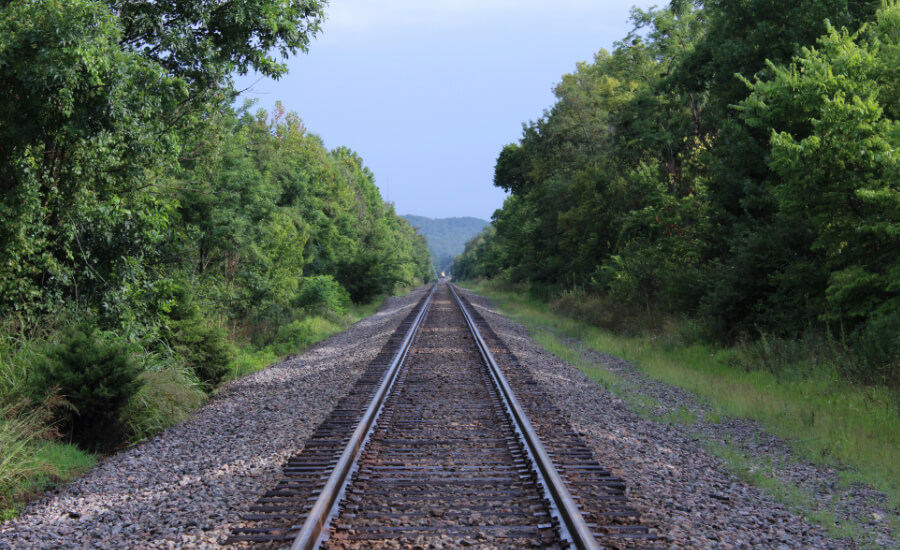
The Pan-Asia Railway Network Northern Route will link up with Thailand
The government of Cambodia has officially agreed to construct the Pan-Asia Railway Network Northern Route to connect with the State Railway of Thailand, starting from Phnom Penh at the north, passing through Kampong Chhnang Province, Battambang Province, and Banteay Meanchey Province to Poipet City at northwest of the Cambodian border, with a total distance of 400km.
Major constructions
Cambodia has continued to open more international flights in 2019

Major economic decisions

-

- Speed test
- Maximum speed is 350kph; the cruising speed within the China-Cambodia segment is 170kph
-

- Construction funds
- Estimated at CNY100 billion
-
- Pan-Asia Railway Network Western Route
- A total distance of 4,760km from Kunming, passing through Yangon (Myanmar) to Singapore
-
- Pan-Asia Railway Network Central Route
- A total distance of 3,900km from Kunming, passing through Vientiane (Laos) to Singapore
-
- Pan-Asian Railway Network Eastern Route
- A total distance of 5,450km from Kunming (Yunnan), passing through Hanoi (Vietnam) to Singapore
-
- Pan-Asian Railway Network shared lines

-
- China’s Belt and Road Initiative
- The “Silk Road Economic Belt” and the “21st Century Maritime Silk Road” aim to bring massive prosperity to the world and benefit more than 60 countries, 63% of the world’s population, and 30% of the world’s GPD.
-
- Silk Road Economic Belt
- Also known as the “Belt,” for short, moves in three directions on land.
-
- 21st Century Maritime Silk Road
- Also known as the “Road,” for short, focuses on moving in two directions.
The Asian Infrastructure Investment Bank (AIIB) initiated the “Belt and Road Initiative” to develop Southeast Asia
Cambodia has become one of the 57 founding countries of AIIB to accelerate its infrastructure investment.

Private investment
Private investment
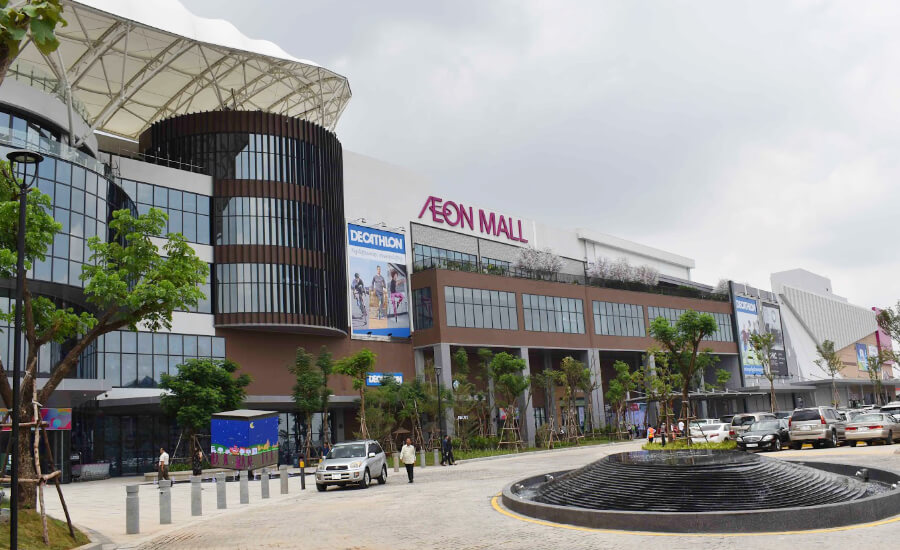
Aeon Mall Japan
Following the opening of the first Aeon Mall with brilliant achievements, Aeon spent US$200 million building a second shopping mall. Recently, it has announced that it will invest and construct the third Aeon Supermarkets at Hun Sen Blvd. to meet the higher needs of the public. It reveals that the consumption growth of Phnom Penh City has moved a step further.
Private investment
Parkson Mall makes further investments
With a total investment amount of more than US$96 million, Parkson Mall on Russian Blvd. in Chaom Chao, Koh Kong District is built to target a more diversified consumer group than that of Aeon Japan. It has restaurants, cinemas, gyms, bookstores, other international fashion brands, entertainment, and leisure consumption, etc., expecting to bring Phnom Penh with another urban atmosphere.

Private investment
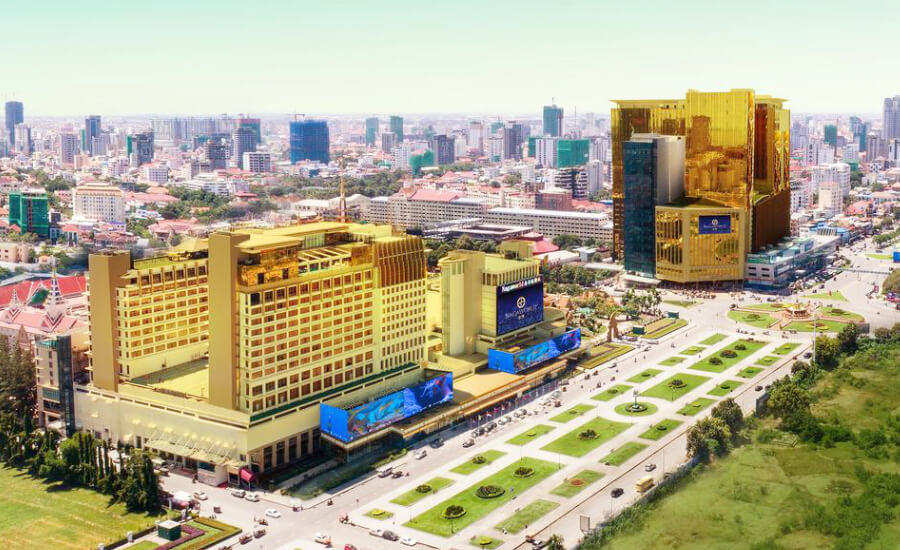
The second phase of NagaWorld Casino, the NAGA2 started business
Optimistic about the growing tourist population and the influx of money in Phnom Penh, Malaysia-based Genting Group invested in the second phase of the existing NagaWorld Casino, the NAGA2. It would consist of a large recreational resort, including casino entertainments, hotels, theaters, restaurants, shopping, and other leisure facilities.
Private investment
Pacific Group works with China National Petroleum Corporation (CNPC) to build a first 5-megaton refinery
Cambodia Petrochemical Company Co., Ltd. (CPC), a subsidiary of the Pacific Group led by Xu Guang Xiu, officially cooperated with CNPC Northeast Refining and Chemical Engineering Co., Ltd. to build the first megaton refinery. It started to operate in 2018.

Private investment
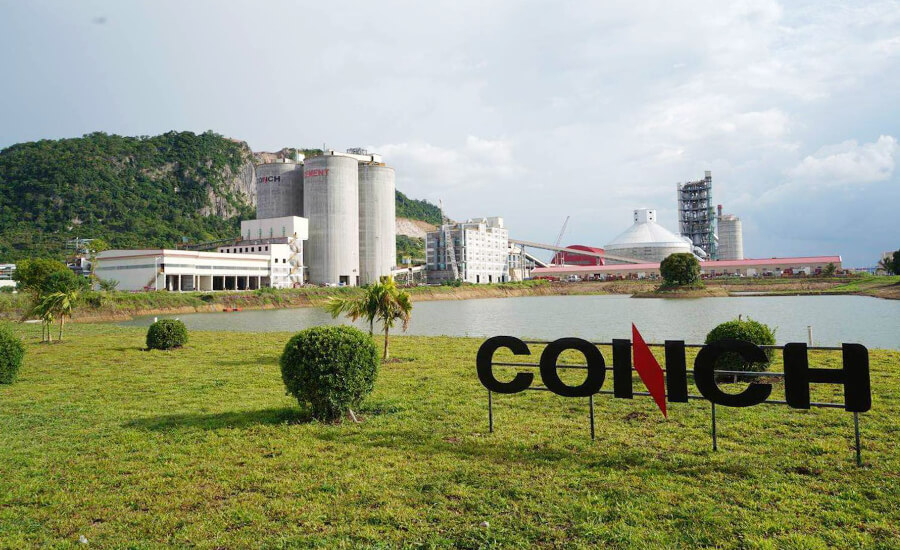
China-Cambodia jointly developed Battambang Conch Cement Co., Ltd.
The opening of Battambang Conch Cement Co., Ltd. in 2018, which is a joint venture between KT Pacific Group and Anhui Conch Cement Co., Ltd., is one of the six major cement plants in Cambodia. The continuous development of the construction industry has prompted the Cambodian Government to pay great attention to the demand of the cement industry and respond to the Chinese Government’s “Belt and Road Initiative.” The purpose is to implement an international development strategy to invest in the construction of large cement production enterprises in Cambodia.
Private investment
Well-known food and beverage groups compete to secure a foothold in Phnom Penh
Cambodia’s tremendous tourism opportunities have attracted Japan’s Aeon, Malaysia’s Parkson, the USA’s Starbucks, Burgerking, and Hard Rock Cafe, Malaysia’s investment in the NagaWorld Casino, investment from Taiwan’s Chatime, and other investments from well-known companies to compete securing a foothold in Phnom Penh.

Private investment
International insurance companies compete to station in Cambodia
Foreign insurance companies are optimistic about the development potential of Cambodian life insurance. Two companies, Thailand’s Dhipaya Insurance Company and Japan’s Dai-ichi Life Insurance Company, officially entered the Cambodian market in 2017 for the first time.

Private investment
World-famous car makers make inroads into the Cambodian market
Cambodia imports a total amount of US$331 million of cars. With the steady growth of the economy, the demand for cars has continued to grow, thus attracting world-renowned carmakers to enter the Cambodian market. They include Audi, BMW, Ford, Chevrolet, etc.

Private investment
China Duty-Free Group, the subordinate of CITS Group, opens three duty-free shops in Phnom Penh, Siem Reap, and Westport
China International Travel Service Group (CITS) is a strategic partner of Cambodia to develop and promote Cambodia’s tourism projects. Cambodia has a rich and diverse range of natural and cultural resources and has a unique advantage in the development of tourism. In addition to its abundant tourism resources, Cambodia has developed a sound tourism policy and strategic framework.


Cambodia’s financial sector
Led by foreign banks
-
Standard
Chartered
Bank -
Sumitomo
Mitsui Banking
Corporation -
Australia and
New Zealand
Banking Group
Limited(ANZ) -
BRED
Bank -
Bank of
China
Limited -
Industrial and
Commercial Bank
of China
Limited(ICBC)
The International Monetary Fund (IMF) and the World Bank have assessed and reduced the debt management capacity of the Cambodian Government to low risk.
According to the National Bank of Cambodia, the net profit of 35 commercial banks in Cambodia reached US$311 million in 2014, up 28.21% from US$243 million in 2013. Based on the report, only seven of the 35 commercial banks are domestic banks; the others are five from Malaysia, six from Taiwan, four from Vietnam, four from Korea, two from China, two from Thailand, one from France, and other individual countries.
Major constructions Introduction
Cambodia is the next block of oil and gas
Treasure resources
The outer sea of the Gulf of Siam contains a lot of oil and natural gas.
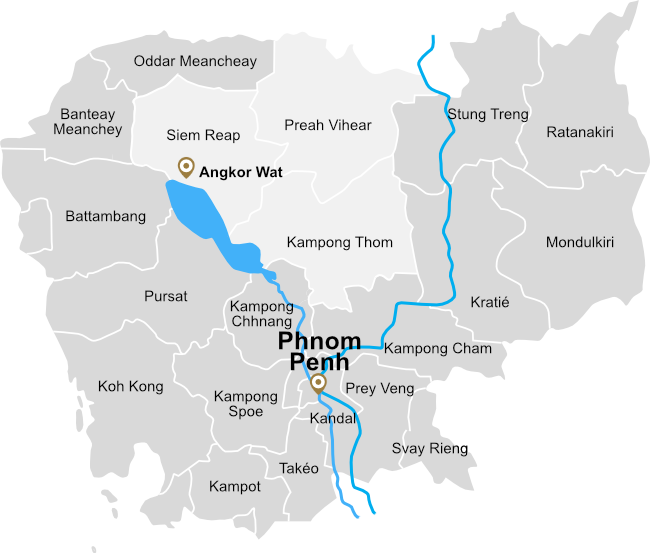
There are a total of 17 oil blocks at Siem Reap Province, Kampong Thom Province, and Preah Vihear Province (three north provinces), with a mining area of more than 6,500 square meters.

Golden 10 years
-
2016The resurgence of ASEAN
-
2018Oil production
-
2020Trans-Asian Railway
-
2025The Belt and Road Initiative
-

China surpasses Korea to become Cambodia’s real estate investment leader
From 2000 to September this year (2019), foreign-funded enterprises have invested in 287 projects in the Cambodian real estate industry, with a construction area of about 10.5 million square meters and a total investment amount of US$4.297 billion. Among the foreign-funded enterprises, there are a total of 18 national enterprises, including 110 projects from China, with a total investment amount of US$1.656 billion to rank first.
-

China helps to build infrastructure
China has spent about US$1 billion to construct 20 roads, and five roads are still under construction. China has also helped construct at least six Cambodia-China Friendship Bridges, as well as provided preferential loans to Cambodia to build a Phnom Penh Autonomous Port, Kandal Province.
-

Under China’s Belt and Road Initiative, Cambodia is an important fulcrum for the Maritime Silk Road
Not only can it promote the construction of China-Indochina Peninsula Economic Corridor, but it also provides essential support for the 21st Century Maritime Silk Road that stretches towards the Indian Ocean and the South Pacific.
-

Cambodia and China officially signed the MoU on National Agricultural Economic and Trade Cooperation Zone
The two sides have agreed to jointly cooperate, from construction, R&D, cultivation and planting to purchasing, warehousing, processing, and further to sales, logistics, and services, in establishing the "China-Cambodia National Agricultural Economic and Trade Cooperation Zone," an industrial chain integration that links up the upstream and downstream industries.